
Well data management is the structured process of capturing, validating, organizing, and using information across the full well lifecycle. For E&P operators, it is not just a database issue. It determines how teams understand the well, trust the data, meet reporting obligations, and make decisions from planning through abandonment.
What Well Data Management Actually Means in the Field
In the field, well data moves through more hands than most systems are built to handle. Land teams define ownership and surface obligations. Drilling teams create daily reports, time logs, surveys, mud records, and construction details. Completions teams add stage data, pressure trends, and vendor files. Integrity, production, and regulatory teams depend on that same record long after the rig is gone.
Without a structured approach, fragmentation becomes the default. A well header changes in one spreadsheet but not another. A contractor file arrives in a different format. A test result sits in an email thread. Well data management gives operators a consistent record that can move with the asset instead of breaking every time the work moves to a new team.
Types of Well Data E&P Teams Manage
E&P teams manage well data across four major categories: header and location data, well log and subsurface records, production and economics data, and operations and construction data. Each category supports a different decision path, but they all depend on shared identifiers, consistent standards, and reliable quality control.
Well Header and Location Data
Header and location data anchor the well record. It includes well names, identifiers, coordinates, field, basin, pad, lease, operator, status, and related hierarchy. When that data is inconsistent, downstream records drift fast. A production record may not match the drilling record. A regulatory submission may reference the wrong identifier. A land, production, or integrity team may spend hours reconciling what should have been one shared record. Clean header data gives every system and team the same starting point.
Well Log Data Management and Subsurface Records
Well log data management covers the subsurface records teams use to understand geology, trajectory, and wellbore conditions. That can include digital logs, raster logs, directional surveys, microseismic data, formation tops, and supporting interpretation files. When those records are incomplete, hard to find, or trapped in undigitized formats, technical teams lose time and confidence. The cost is not only storage inefficiency. It is slower subsurface evaluation, weaker offset analysis, and more manual work before teams can trust the picture below ground.
Production and Economics Data
Production and economics data connect the well record to performance and value. Teams use production volumes, forecasts, downtime, costs, reserves inputs, and economic assumptions to understand whether an asset is meeting expectations. Gaps in this data create problems during reserve audits, budget reviews, regulatory reporting, and planning cycles. A well may look healthy operationally but tell a different story economically. Strong well data management keeps performance context close to the physical and operational history of the well.
Operations and Construction Data
Operations and construction data tracks what happened from permitting through abandonment. That includes drilling reports, casing and cementing details, completions records, workovers, maintenance, inspections, pressure tests, barrier status, site construction, reclamation, and abandonment documentation. Incomplete records create compliance exposure because teams cannot prove what was done, when it happened, or what changed. They also create operational risk when engineers make decisions without the full construction and intervention history.
Core Processes That Make Well Data Management Work
Reliable well data management depends on three core processes: integration, quality control, and standards. Without them, a program may collect more information, but it will still push teams into manual reconciliation, duplicate entry, and decisions based on incomplete records.
Data Integration
Data integration brings together inputs from field teams, contractors, sensors, service companies, state databases, and internal business systems. The goal is not to dump every file into one repository. The goal is to connect data to the right well, event, activity, and workflow so it can be used. Strong integration reduces duplicate entry, gives office teams faster access to field updates, and keeps records moving across drilling, completions, integrity, production, and land workflows without constant rework.
Data Quality Control
Data quality control determines whether teams can trust the record. Automated validation, required fields, range checks, missing data flags, and version control catch problems before they spread. Manual QC has a place, but it does not scale across thousands of wells, contractors, reports, and daily updates. If teams have to inspect every record by hand, the process becomes slow and inconsistent. Automated QC gives experts more time to review exceptions instead of hunting for basic errors.
Standards and Taxonomies
Standards and taxonomies give well data a common language. PPDM and similar industry data standards help harmonize terminology, identifiers, relationships, and reporting structures across systems. That matters when operators integrate new assets, migrate platforms, or connect technical, production, land, and regulatory workflows. Proprietary taxonomies can create migration risk because the data may be difficult to map, export, or reuse later. A standards-based approach protects long-term interoperability and data portability.
Where Well Data Management Breaks Down in Practice
Well data management usually breaks down in predictable ways: teams lose efficiency, risk increases, and decisions slow down. The issue is rarely that operators lack data. The issue is that the data sits in disconnected tools, inconsistent formats, and partial records that require manual work before anyone can use it.
Operational Efficiency Loss
A drilling engineer should not have to compare a contractor PDF, a spreadsheet, and a daily report just to confirm the latest casing detail. When records live in disconnected places, routine questions become reconciliation projects. The field keeps working, but the office slows down.
Risk Exposure
Compliance and well integrity depend on complete, current, traceable records. If pressure tests, barrier details, equipment history, or construction data are missing or inconsistent, teams can miss early warning signs and struggle to defend decisions during audits or regulatory reviews.
Decision Latency
Fragmented data delays technical decisions. A completions team may wait for clean offset data. An integrity team may wait for status history. A production team may wait for updated well context. Every delay pushes decisions farther from the work that needs them.
What Separates a Functional Well Data Management Platform from a Point Solution
A functional well data management platform does more than store files. It connects the well record across the lifecycle, validates data as work happens, supports standards-based interoperability, and gives different teams a shared operating picture. Operators should assess platforms against four practical criteria.
Integration Depth
Integration depth means the platform connects the full well record, not just one slice of it. If software covers drilling reports but not completions, integrity, production, or land context, teams still have to bridge gaps manually. Partial coverage creates partial trust.
QC Automation
QC automation keeps quality checks close to data entry. The platform should flag missing values, inconsistent fields, invalid ranges, and version changes at scale. That gives teams cleaner records earlier and reduces the cleanup burden before reporting, audits, or technical analysis.
Standards Compliance
Standards compliance matters because well data rarely stays in one system forever. PPDM alignment and structured taxonomies support interoperability, regulatory reporting, acquisition integration, and long-term portability. Operators need confidence that their data can move without losing meaning.
Lifecycle Coverage
Lifecycle coverage is the difference between tracking active operations and managing the full asset record. A well data management platform should support planning, permitting, drilling, completions, integrity, production context, workovers, abandonment, and reclamation without forcing teams into disconnected tools.
How WellView Manages Well Data Across the Full Asset Lifecycle
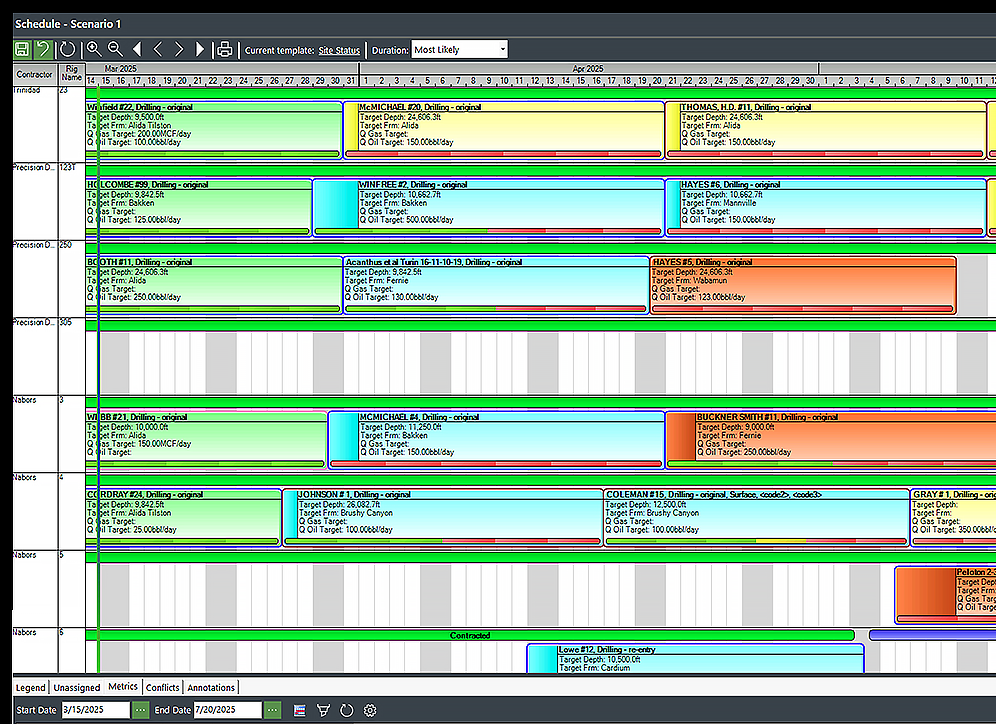
WellView applies well data management principles across the full asset lifecycle. It gives operators a structured, validated record from planning and construction through operations, integrity, production context, and abandonment. As part of the Peloton Platform, WellView connects with production, land, completions, integrity, and reporting workflows so teams work from one source of truth instead of separate departmental records. It supports lifecycle visibility, automated data capture, visual well schematics, validation at entry, and audit-ready records. For operators evaluating well data management software, the benefit is simple: cleaner data, stronger handoffs, and faster decisions across the teams responsible for the well. To see how it fits your operation, request a demo.
Frequently Asked Questions
What is the difference between well data management and production data management?
Well data management focuses on the well record across the asset lifecycle, including planning, drilling, completions, construction, integrity, workovers, and abandonment. Production data management focuses on produced volumes, field data capture, allocation, surveillance, hydrocarbon accounting, and production reporting. The two are connected. Production teams need accurate well context, and well teams need performance history to understand asset outcomes.
How does well data management software integrate with existing land and production systems?
Well data management software integrates through shared identifiers, structured data models, APIs, ETL workflows, and connections between operational systems. The practical test is whether the same well record can support land, production, drilling, completions, and integrity teams without duplicate entry. On the Peloton Platform, WellView connects with tools such as ProdView, LandView, SiteView, RigView, Peloton Frac, and Peloton Dashboards so well data can move across related workflows.
What does a well data migration look like when switching platforms?
A well data migration usually starts with inventorying source systems, identifying key records, mapping fields, cleaning duplicates, validating identifiers, and loading the data into the new structure. The migration should include business review, exception handling, and user validation before go-live. The hardest part is rarely the transfer itself. It is making sure the data retains meaning, relationships, and trust after it moves.
Is well data management relevant for smaller operators with fewer active wells?
Yes. Smaller operators may have fewer wells, but they still need clean records for compliance, planning, partner reporting, audits, and asset decisions. Fragmentation hurts small teams quickly because there are fewer people available to reconcile spreadsheets, contractor files, and legacy records. A practical well data management program gives smaller operators structure without forcing unnecessary complexity.